


What are the advantages of an electric forklift
 Oct 20, 2025|
 View:520
The industrial landscape is evolving rapidly, driven by sustainability goals, technological advancements, and the need for cost-effective material handling solutions. Among the equipment at the forefront of this transformation is the electric forklift, a battery-powered alternative to traditional internal combustion engine (ICE) forklifts. Once overshadowed by their diesel or propane-fueled counterparts, electric forklifts have surged in popularity due to their environmental benefits, operational efficiency, and adaptability to modern warehouse demands. This article explores the key advantages of electric forklifts, demonstrating why they are becoming indispensable in industries ranging from logistics to manufacturing.
1.Environmental Sustainability: A Greener Alternative
One of the most compelling advantages of electric forklifts is their minimal environmental impact. Unlike ICE forklifts, which emit carbon monoxide, nitrogen oxides, and particulate matter, electric forklifts produce zero tailpipe emissions. This makes them ideal for indoor use in warehouses, factories, and distribution centers where air quality is a critical concern.
Reduced Carbon Footprint: Electric forklifts rely on rechargeable batteries, often powered by renewable energy sources such as solar or wind. This aligns with global efforts to decarbonize industrial operations.
Compliance with Regulations: Many regions are imposing stricter emissions standards for indoor equipment. Electric forklifts help businesses avoid fines and demonstrate corporate responsibility.
Healthier Workplaces: By eliminating exhaust fumes, electric forklifts improve air quality, reducing respiratory risks for workers and creating safer environments.
2.Cost Efficiency: Long-Term Savings
While electric forklifts may have a higher upfront cost compared to ICE models, their long-term financial benefits are substantial.
Lower Operating Costs: Electric forklifts have fewer moving parts, reducing maintenance needs. There’s no requirement for oil changes, spark plug replacements, or exhaust system repairs.
Energy Efficiency: Electricity is generally cheaper than diesel or propane, especially when charged during off-peak hours. Over time, this translates to significant fuel savings.
Extended Lifespan: With proper battery care, electric forklifts can operate efficiently for up to 10 years, outlasting many ICE models.
3.Enhanced Performance: Precision and Productivity
Electric forklifts are engineered for precision and consistency, making them suitable for high-demand environments.
Smooth Operation: Electric motors provide instant torque, enabling smoother acceleration and deceleration. This reduces product damage during handling.
Quieter Performance: The absence of engine noise minimizes workplace distractions, fostering better communication and focus.
Compact Design: Electric forklifts are often more compact than ICE models, allowing maneuverability in tight spaces such as narrow aisles or crowded loading docks.
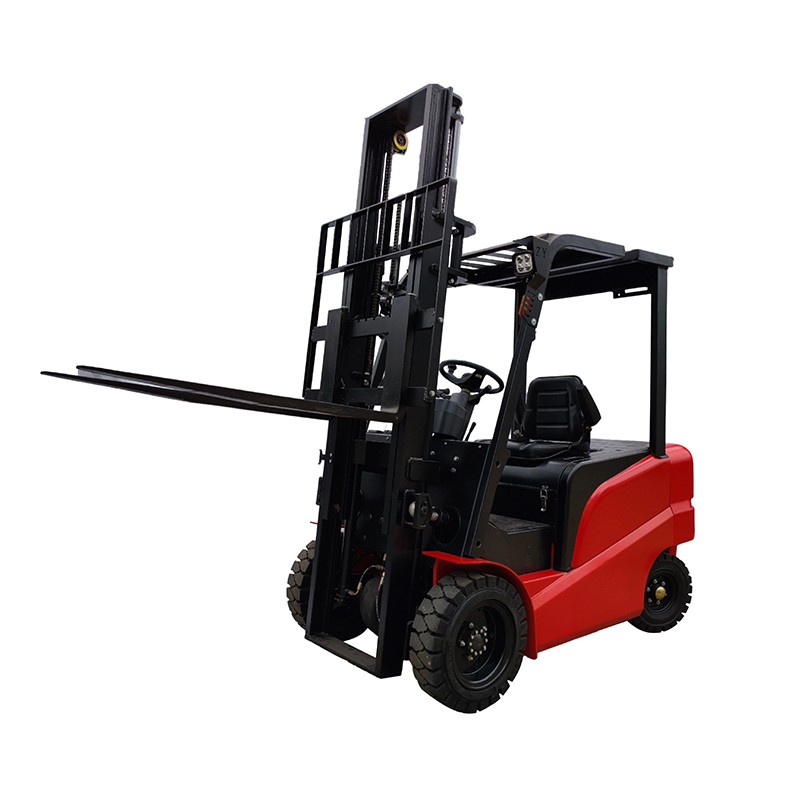
4.Versatility: Adaptability to Diverse Applications
Modern electric forklifts are designed to meet a wide range of operational needs.
Indoor and Outdoor Use: While traditionally associated with indoor settings, advanced electric forklifts now feature weatherproofing and rugged tires for outdoor applications.
Battery Technology Advancements: Lithium-ion batteries offer faster charging, longer runtimes, and lighter weights compared to traditional lead-acid batteries. Some models even support opportunity charging, where batteries are topped up during breaks.
Customization Options: Manufacturers offer electric forklifts with varying load capacities, lift heights, and attachments (e.g., clamps, rotators) to suit specific tasks.
5.Safety: Reducing Workplace Risks
Safety is a top priority in material handling, and electric forklifts excel in this area.
Stable Operation: Electric motors eliminate the risk of fuel leaks or engine fires, reducing fire hazards.
Improved Visibility: The quieter operation of electric forklifts allows operators to hear ambient sounds, enhancing situational awareness.
Regenerative Braking: Many electric forklifts use regenerative braking systems, which recover energy during deceleration and improve braking efficiency.
6.Technological Integration: Smart Features for Modern Workflows
Electric forklifts are at the forefront of industrial innovation, incorporating smart technologies.
Telematics and Data Analytics: Built-in sensors track usage patterns, battery health, and maintenance needs, enabling predictive maintenance and reducing downtime.
Automation Compatibility: Electric forklifts are easier to integrate with automation systems, such as autonomous guided vehicles (AGVs), paving the way for Industry 4.0 adoption.
User-Friendly Interfaces: Touchscreen displays and ergonomic controls simplify operation, reducing training time for new users.
Conclusion: The Future of Material Handling Lies with Electric Forklifts
The advantages of electric forklifts are undeniable. From their eco-friendly design to their cost efficiency, performance, and safety features, electric forklifts represent a transformative shift in material handling. As battery technology continues to advance and sustainability becomes a non-negotiable priority, the adoption of electric forklifts will only accelerate. Businesses that invest in electric forklifts today are not only reducing their environmental impact but also positioning themselves for long-term success in a competitive, technology-driven market. The electric forklift is no longer a niche alternative—it is the future of efficient, responsible, and forward-thinking industrial operations.


