


What is the difference between a stand-up forklift and a stand-up reach forklift
 May 21, 2026|
 View:304
The biggest difference between a stand-up forklift and a stand-up reach forklift comes down to how high you need to lift and how tight your space is. If you work in a warehouse with tall racks and narrow aisles, you might want to check out the Double Stand Up High Reach Forklift from Jiangsu Zhongyan Forklift Manufacturing Co., Ltd. Picking the right forklift really helps you move products safely and make the most of your space.
Key Takeaways
Stand-up forklifts are ideal for moving heavy loads in wide aisles, while stand-up reach forklifts excel in tight spaces with high shelves.
Choosing the right forklift boosts productivity and safety in your warehouse. Assess aisle width, lifting height, and load types before deciding.
Stand-up reach forklifts allow you to maximize vertical storage, making them perfect for small warehouses with tall racks.
Both forklift types have unique advantages: stand-up forklifts offer speed and maneuverability, while reach forklifts provide access to high shelves.
Regular training and safety checks are essential for safe forklift operation, helping to prevent accidents and ensure smooth warehouse operations.
Stand-Up Forklift
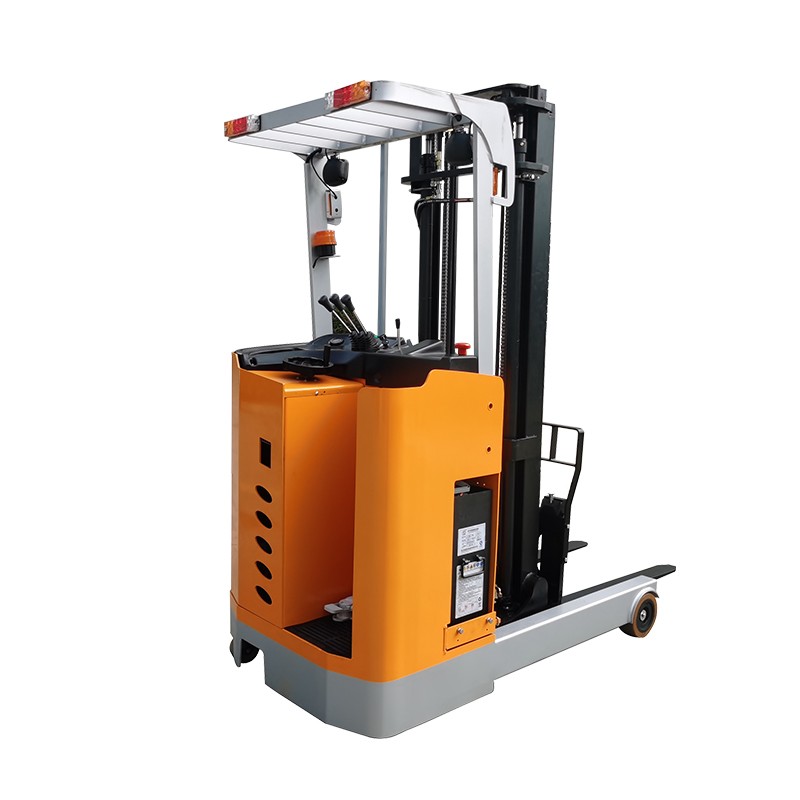
Definition
You might see a stand-up forklift in many warehouses. This type of forklift lets you stand while you drive and operate it. You face forward, which gives you a clear view of your surroundings. The stand-up forklift is compact and easy to move around. You can use it in places where space is tight and you need to turn quickly.
Features
If you look at a stand-up forklift, you will notice some special features:
Compact design fits into tight warehouse spaces.
Counterbalance structure helps balance the load you lift.
Quick maneuvering makes it easy to turn and move short distances.
Great for loading and unloading tasks.
Operators stand facing forward for excellent visibility.
High maneuverability in narrow aisles.
Fast entry and exit for operators.
Tip: You can save time with a stand-up forklift because you do not need to climb in and out like you do with sit-down models.
Common Uses
You will find stand-up forklifts in many places where space is limited. These forklifts work best in confined areas and low-ceilinged indoor settings. You can use them for short-distance transport and frequent loading and unloading. Retail warehouses, logistics hubs, and production facilities often rely on stand-up forklifts for daily tasks. If you need to move products quickly in a busy warehouse, this forklift can help you get the job done.
Stand-Up Reach Forklift
Definition
A stand up reach forklift lets you stand while you drive and operate it, just like a stand-up forklift. You will notice that this type of forklift has a compact body and can turn easily. You can use it in tight spaces, like small warehouses or supermarket logistics areas. Most people use stand-up reach forklifts for light loads and short trips.
You drive in a standing position.
The forklift has a small body and turns easily.
It works well in narrow aisles and crowded spaces.
You can use it for moving goods over short distances.
Features
If you need to reach high shelves or work in narrow aisles, a stand up reach forklift is a great choice. The Double Stand Up High Reach Forklift from Jiangsu Zhongyan Forklift Manufacturing Co., Ltd. shows how advanced these machines can be. This forklift gives you strong performance and helps you work safely. You can move goods up to high racks and still turn smoothly in tight spots. The electric motor saves energy and the controls are easy to use. You will feel less tired after a long shift because the design is comfortable. The forklift also lasts a long time and does not need much maintenance.
Note: You can trust this forklift to help you store more items in less space and keep your warehouse running smoothly.
Common Uses
You will see stand-up reach forklifts in many busy warehouses and distribution centers. They help you get the most out of your vertical storage and work well in narrow aisles. Here is a quick look at how they help:
Key Features | Benefits |
|---|---|
Maximize Vertical Storage | Store more goods in the same space |
Operates in Narrow Aisles | Work easily in tight areas |
Faster Picking & Placing | Grab and place pallets quickly |
Improved Accessibility | Reach stored items with less effort |
Enhanced Safety & Stability | Stay safe in busy environments |
Reduced Labor & Costs | Save money and time |
You can use a stand-up reach forklift for stacking, picking, and moving goods in places where space is tight and shelves are tall.
Key Differences
Design Comparison
You can spot the difference between these forklifts just by looking at them. A stand-up forklift has a compact body and a counterbalance design. You stand facing forward, which helps you see everything around you. This forklift works well in tight spaces and lets you turn quickly.
A stand-up reach forklift looks similar, but it has a special feature. You can extend the forks forward to reach higher shelves. The reach mechanism helps you grab pallets from deep racks. You stand sideways, so you can see both the load and the aisle. This design makes it easier to work in narrow aisles and reach tall racks.
Tip: If your warehouse has tall shelves and tight spaces, a stand-up reach forklift gives you more flexibility.
Performance Comparison
You want to know how these forklifts perform. Let’s look at their lifting power and reach. Here’s a quick table that shows the main differences:
Forklift Type | Load Capacity | Lifting Height |
|---|---|---|
Stand-up Forklifts | 4000 lb - 6000 lb | 2000 mm - 5000 mm |
Stand-up Reach Forklifts | 3000 lb - 4500 lb | Up to 45 feet (13716 mm) |
A stand-up forklift can lift heavier loads, but it doesn’t reach as high. You use it for moving heavy pallets over short distances. A stand-up reach forklift lifts lighter loads, but it can reach much higher shelves. You can stack goods up to 45 feet, which helps you use vertical space.
Safety matters when you use these machines. Here are some things you need to watch out for:
Stand-up forklift: Watch for tip-over risks when carrying heavy loads.
Reach truck: Extra caution is required when lifting high loads to prevent falling pallets.
Operator training, regular inspections, and proper maintenance are essential for safe operations.
You need to stay alert and follow safety rules. Training helps you avoid accidents and keeps your warehouse running smoothly.
Use Case Comparison
You might wonder where you should use each forklift. A stand-up forklift works best in places with low racks and wide aisles. You can load and unload trucks, move pallets, and handle daily tasks. This forklift is perfect for retail warehouses and production areas.
A stand-up reach forklift shines in tall warehouses with narrow aisles. You can pick and place goods on high shelves. This forklift helps you maximize storage and reach items that regular forklifts can’t. Distribution centers and busy warehouses often use stand-up reach forklifts to save space and boost efficiency.
Note: If you need to reach high shelves and work in tight spots, a stand-up reach forklift is your best friend.
Pros and Cons
Stand-Up Forklift Advantages
You get a lot of benefits when you use a stand-up forklift in your warehouse. These machines help you work faster and safer. Here are some reasons you might like them:
Operator assist technologies let you move quickly without sacrificing safety.
Adaptive speed controls help you turn corners smoothly, so you don’t need to slow down manually.
End-of-aisle slowdowns keep you safe from blind spots while you stay productive.
Location-based assist features make sure you follow custom rules, like slowing down near shipping docks or staying out of restricted zones.
If you want to boost productivity and keep your team safe, a stand-up forklift can make your job easier.
Stand-Up Forklift Disadvantages
You might notice some drawbacks with stand-up forklifts. These machines work best in certain situations. Here are a few things to consider:
Limited reach means you can’t access high shelves.
Not ideal for heavy loads in tall racking systems.
Works best in warehouses with lower ceilings and wider aisles.
Stand-Up Reach Forklift Advantages
Stand-up reach forklifts shine in tall and narrow warehouse spaces. You can reach higher shelves and use your space better. Here’s what makes them special:
You can access heights over 30 feet, which helps you use high-bay racking systems.
These forklifts work in narrow aisles, sometimes as small as 8 feet wide.
You maximize racking density and increase inventory storage.
Narrow aisle forklifts let you add more shelving and reduce wasted space.
You get more storage and better space utilization when you use a stand-up reach forklift in tight warehouses.
Stand-Up Reach Forklift Disadvantages
You may face some challenges with stand-up reach forklifts. These machines have limits you should know about:
Lower load capacity compared to standard forklifts.
Not the best choice for moving heavy pallets over long distances.
Requires operator training for safe use at high elevations.
Choosing the Right Forklift
Assessing Needs
You want to make sure you pick the right forklift for your warehouse. Start by looking at your space and layout. Ask yourself a few questions:
How wide are your aisles?
How high do you need to lift?
What types of loads do you handle?
What is your work environment like?
Take a look at this table to help you decide:
Question | Importance |
|---|---|
What Is Your Aisle Width? | Influences maneuverability and the type of forklift needed. |
How High Do You Need to Lift? | Determines the required mast height based on storage needs. |
What Types of Loads Will You Handle? | Affects lift capacity and fork length requirements. |
What Is Your Work Environment Like? | Determines tire type and engine preference for indoor/outdoor use. |
You should also think about how often you move goods and how heavy your loads are. If your warehouse has narrow aisles and tall racks, you might need a reach forklift. Wide aisles and heavy loads call for a different machine.
Tip: Write down your answers to these questions before you start shopping. It helps you stay focused and find the best fit.
Application Match
Now, match your needs to the right forklift. If you work in a warehouse with wide aisles, a stand-up forklift gives you speed and flexibility. You can move heavy pallets and turn quickly. For narrow aisles and high shelves, reach forklifts shine. They let you grab goods from tall racks without moving the whole truck.
Here’s a quick list to help you match forklifts to your warehouse:
Use electric forklifts indoors for clean air and quiet operation.
Pick reach forklifts for tight spaces and high storage.
Choose counterbalanced forklifts for heavy loads and wide aisles.
Make sure your forklift fits through entry points and can reach your tallest shelf.
Think about your daily tasks. If you stack pallets high or work in tight spots, reach forklifts make your job easier. If you move lots of heavy goods fast, a stand-up forklift is your best friend.
Remember: The right forklift boosts safety, saves time, and helps you get more done every day.
You now know the main difference between a stand-up forklift and a stand-up reach forklift. One helps you move heavy loads quickly, while the other lets you reach tall shelves in tight spaces. Picking the right forklift makes your warehouse safer and more efficient. Here’s what happens when you choose wisely:
You boost productivity and cut down on delays.
Modern forklifts help prevent accidents with smart safety features.
You make better decisions by matching your forklift to your warehouse layout.
If you need high-reach solutions, electric reach forklifts work well in narrow aisles and improve storage. Products like the Double Stand Up High Reach Forklift offer advanced features for busy warehouses.
FAQ
What is the main difference between a stand-up forklift and a stand-up reach forklift?
You use a stand-up forklift for moving heavy loads on lower racks. You use a stand-up reach forklift to reach higher shelves in tight spaces. The reach forklift extends its forks to grab pallets from tall racks.
Can I use a stand-up reach forklift in a small warehouse?
Yes, you can! Stand-up reach forklifts work well in narrow aisles and crowded spaces. You get more storage by stacking goods higher. This makes them perfect for small warehouses with tall racks.
How do I choose the right forklift for my warehouse?
You should check your aisle width, rack height, and load weight. If you need to reach tall shelves in tight spots, pick a stand-up reach forklift. For heavy loads and wide aisles, a stand-up forklift works best.
Are electric forklifts better for indoor use?
You get clean air and less noise with electric forklifts. They work great indoors and help keep your warehouse safe. You also save money on fuel and maintenance.
What safety tips should I follow when using these forklifts?
Always wear safety gear.
Get proper training before you operate any forklift.
Check your forklift before each shift.
Keep aisles clear and follow warehouse rules.


